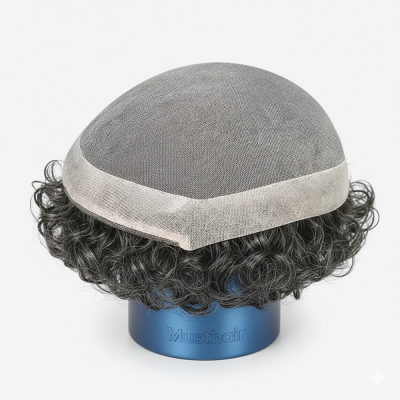
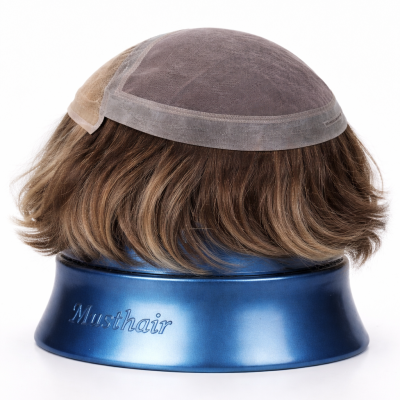
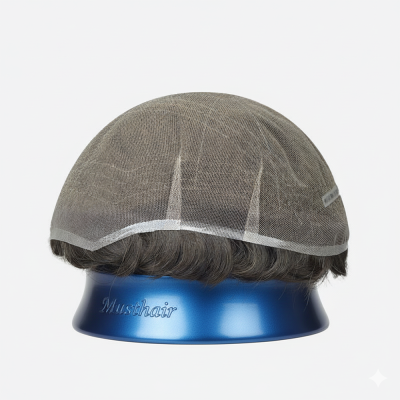
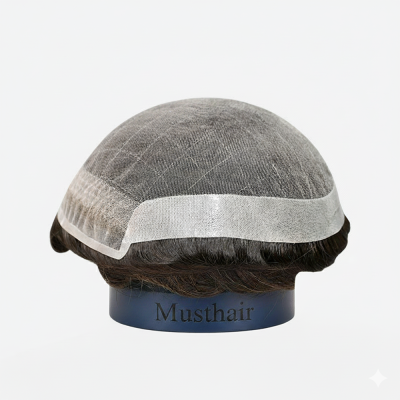
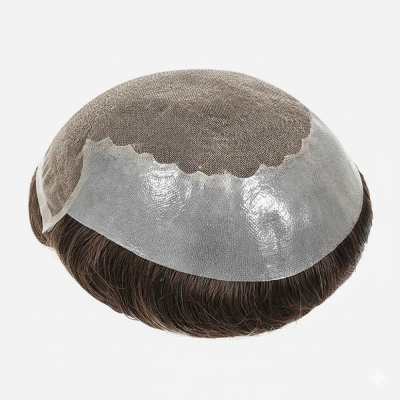




 Darkest Shade
#1
Jet Black
An intense, defined black shade. Best considered for users whose natural hair has no visible brown undertones.

Musthair Expert Guide
Explore color codes, undertones, and gray-blend percentages in a clear way to help your hair system blend seamlessly with your natural hair.
Understand the Color Codes
The main number indicates the depth level, ASH identifies a cool undertone, and the numbers after 1B show the gray/white hair blend.
In general, lower numbers appear darker and higher numbers appear lighter. Matching the depth level of your natural hair is the first step.
ASH-coded colors reduce red, orange, and golden reflections. Compare these options when your natural hair has a muted, cool appearance.
In the 1B05–1B80 series, the final two digits indicate the approximate gray-hair percentage. Choose according to the actual amount of gray in the sides and back of your hair, not according to age.
All Colors
Darkest Shade
An intense, defined black shade. Best considered for users whose natural hair has no visible brown undertones.
 Deep Black
A dark black option close to jet black that can appear softer in natural light.
 Soft Black
A dark black shade with a softer, more natural transition than a sharp jet-black look.
 Popular Choice
A core Musthair shade that provides a natural appearance between black and very dark brown.
 Near Black
A shade that appears close to black at first glance, with more noticeable brown reflections in daylight.
 Natural Brown
A dark, balanced hair color with a clearly defined brown character.
 Balanced Shade
A shade lighter than dark brown that can blend with warm or neutral undertones.
 Cool Undertone
A more muted, cool dark brown with reduced red and warm reflections.
 Medium Depth
A balanced, natural medium brown between dark and light brown.
 Light Brown
A soft brown shade lighter than medium brown and approaching dark blonde.
 Warm Dark Blonde
A shade between light brown and dark blonde that may show warm reflections in daylight.
 Cool Dark Blonde
A muted, cool dark-blonde shade with reduced golden, orange, and red reflections.
 Very Light Gray
A very subtle scattering of gray/white hair within a natural-black base shade.
 Lightly Graying
A noticeable but light gray blend that preserves the overall dark appearance.
 Noticeable Gray
A balanced gray blend that retains a predominantly dark appearance.
 Balanced Graying
A naturally graying appearance with more visible gray strands.
 Salt and Pepper
A defined salt-and-pepper appearance with both dark and gray hair clearly visible.
 Even Blend
A balanced appearance with approximately equal proportions of dark and gray hair.
 Gray-Dominant
A blend in which gray hair begins to appear more dominant than dark hair.
 High Gray
A predominantly gray/white shade with a small amount of natural black.
Undertone Comparison
Even when the depth level is correct, a mismatched undertone can make the hair system look different from the hair at the sides and back.
These shades may show brown, golden, or slightly warm reflections under light.
They appear more muted and neutral, with fewer warm, red, or orange reflections.
Gray-Blend Series
As the amount of gray/white hair added to the 1B base shade increases, the appearance progresses from dark black to predominantly gray.
| Code | Gray Percentage | Overall Appearance |
|---|---|---|
| #1B05 | 5% | Very light, sparse gray |
| #1B10 | 10% | Lightly Graying |
| #1B20 | 20% | Predominantly dark with noticeable gray |
| #1B30 | 30% | Natural, balanced graying |
| #1B40 | 40% | Defined salt-and-pepper appearance |
| #1B50 | 50% | Approximately equal dark and gray |
| #1B60 | 60% | Predominantly gray appearance |
| #1B80 | 80% | Mostly gray / white |
Accurate Color Matching
On-screen comparison is a useful starting point. For the most natural result, use one or more of the methods below.
Take unfiltered photos of the right, left, and back sections of your hair. Your hair should be dry, preferably photographed in daylight near a window.
Compare the color swatch beside the hair at the sides and back where the system will blend. Check it both indoors and in natural daylight.
For the most precise comparison, our specialists can assess an untreated hair sample taken from the side or back area.
